- 181 S Franklin Ave, Valley Stream, NY 11581, United States



AllPoints Unlimited
AllPoints Unlimited Inc. is a U.S.-based freight forwarder and logistics provider with over 25 years of experience. We help businesses move cargo efficiently, compliantly, and on time — across the U.S. and around the world.
How Bonded Warehousing Saves U.S. Importers Time and Money
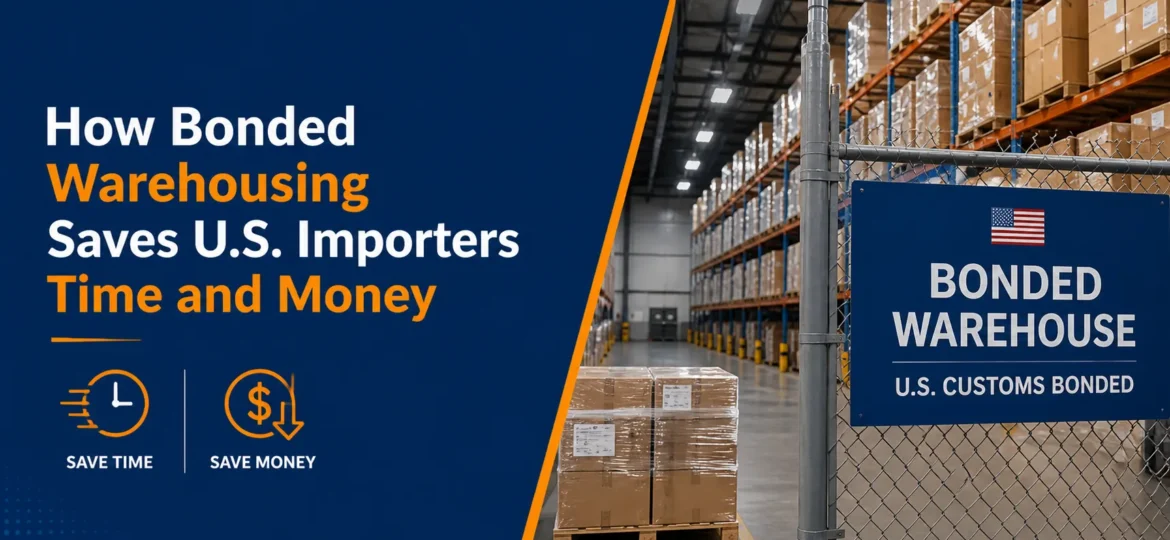
For businesses importing goods into the United States, cash flow management is one of the biggest operational challenges. Duties and taxes are often due immediately upon arrival — before you’ve had a chance to sell a single unit, find a buyer, or even decide where the goods are going. That’s where bonded warehousing comes in.
A bonded warehouse is a secured storage facility authorized by U.S. Customs and Border Protection (CBP) where imported goods can be stored without paying duties or taxes until those goods are released for domestic distribution. For importers managing large volumes, unpredictable demand cycles, or complex distribution networks, this is not just a convenience — it’s a strategic financial tool.
What Is a Bonded Warehouse and How Does It Work?
When goods arrive in the United States, they are typically subject to immediate customs entry and duty payment. Under a bonded warehouse arrangement — specifically Entry Type 21 — importers can defer those payments until the goods are withdrawn for domestic consumption.
The goods are stored under CBP supervision, and the importer (or their customs broker) posts a bond with CBP guaranteeing that duties will be paid when the goods are eventually released. This bond is what gives the facility its name.
Goods can remain in a bonded warehouse for up to five years. During that time, they can be manipulated, repacked, relabeled, or even re-exported to another country entirely — in some cases without ever paying U.S. duties at all.
Key Benefits for U.S. Importers
The advantages of bonded warehousing go well beyond just delaying a payment. Here is what importers typically gain:
• Duty deferral — You only pay duties when goods are pulled for sale or distribution, not when they land at the port. This can significantly ease cash flow for seasonal businesses or those managing large inventory volumes.
• Flexibility in distribution — You can release goods in batches based on actual demand rather than moving everything at once. This reduces both storage costs elsewhere and the risk of overstocking.
• Re-export options — If market conditions change or a better buyer is found overseas, goods can be re-exported from the bonded warehouse without paying U.S. import duties at all.
• Manipulation and processing — Goods can be sorted, repackaged, or relabeled inside the bonded facility, allowing importers to customize shipments for different customers or markets without breaking customs compliance.
• Reduced financial risk — For importers bringing in goods speculatively or ahead of confirmed orders, bonded storage removes the pressure of having to pay duties on goods that haven’t yet generated revenue.
Who Should Consider Bonded Warehousing?
Bonded warehousing is not the right solution for every importer. It works best for businesses that:
• Import large volumes with variable or seasonal demand
• Need time to find domestic buyers before committing to duty payments
• Regularly re-export a portion of their imported inventory
• Deal in high-value goods where duties represent a significant cost
• Require flexibility in how and when goods are distributed across the U.S.
Industries that commonly use bonded warehouses include electronics, automotive parts, luxury goods, apparel, and food and beverage — particularly for products subject to fluctuating tariff rates or uncertain demand.
Common Misconceptions About Bonded Warehouses
Many importers assume bonded warehousing is complicated or only for large corporations. In reality, any licensed customs broker or freight forwarder with bonded warehouse access can set this up on your behalf. The process involves filing an Entry Type 21 with CBP, posting the required bond, and moving goods into the approved facility — your logistics partner handles all of it.
Another misconception is that bonded storage is expensive. While there are storage fees, these are typically far outweighed by the duty deferral benefit, especially for high-tariff goods or large shipments where duties can run into tens of thousands of dollars.
How AllPoints Unlimited Can Help
At AllPoints Unlimited Inc., we manage the entire bonded warehousing process for our import clients. From filing the correct entry type with CBP to coordinating domestic distribution once goods are released, we handle the logistics so you can focus on your business.
With over 25 years of experience in freight forwarding and customs compliance, we understand how to structure your import operations to minimize duty exposure and maximize flexibility. Whether you’re importing a one-time shipment or managing an ongoing supply chain, our warehousing solutions are built around your timeline and your needs.
Contact AllPoints Unlimited today to find out whether bonded warehousing is the right fit for your import operation.

Leave A Comment