- 181 S Franklin Ave, Valley Stream, NY 11581, United States


AllPoints Unlimited
AllPoints Unlimited Inc. is a U.S.-based freight forwarder and logistics provider with over 25 years of experience. We help businesses move cargo efficiently, compliantly, and on time — across the U.S. and around the world.
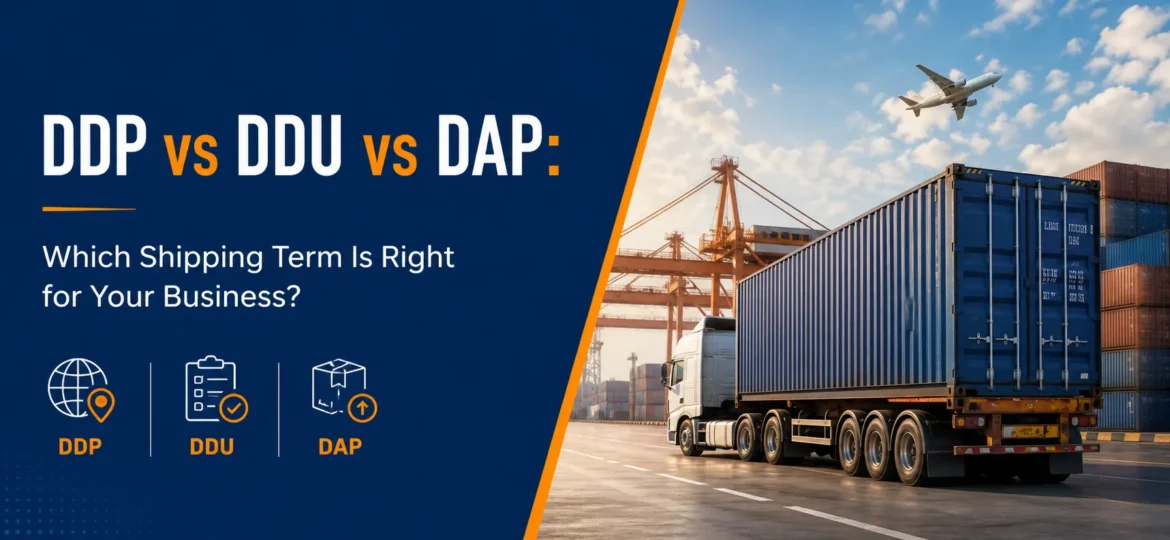
DDP vs DDU vs DAP: Which Shipping Term Is Right for Your Business?
When you’re arranging an international shipment, one of the most consequential decisions you’ll make is agreeing on delivery terms — also known as Incoterms. These terms define who is responsible for freight costs, insurance, customs clearance, duties, and final delivery at each stage of the journey.
Three of the most commonly used terms for door-to-door international shipments are DDP (Delivered Duty Paid), DDU (Delivered Duty Unpaid), and DAP (Delivered at Place). Choosing the wrong one can lead to unexpected costs, customs delays, or disputes with your trading partner. This guide explains each term clearly and helps you decide which one fits your situation.
What Are Incoterms and Why Do They Matter?
Incoterms — International Commercial Terms — are a standardized set of trade terms published by the International Chamber of Commerce. They define the responsibilities of buyers and sellers in international transactions, covering everything from who arranges and pays for freight to who handles customs clearance and bears the risk of loss or damage during transit.
Getting Incoterms wrong is costly. If you agree to ship DDP without understanding what that entails, you may find yourself responsible for duties, taxes, and customs brokerage fees in the destination country — costs you hadn’t priced into your quote. Conversely, agreeing to DDU as a buyer can mean your goods sit at the port while you scramble to find a local customs broker.
DDP — Delivered Duty Paid
DDP is the most seller-friendly term from the buyer’s perspective — and the most demanding for the seller. Under DDP, the seller takes responsibility for the entire delivery, including:
• Export customs clearance at origin
• International freight (air or ocean)
• Import customs clearance at destination
• Payment of all import duties and taxes
• Final delivery to the buyer’s specified location
From the buyer’s perspective, DDP is simple — they receive the goods at their door with all costs covered. From the seller’s perspective, DDP requires deep knowledge of the destination country’s customs regulations and duty rates, plus the ability to arrange local customs clearance and delivery.
DDP works well when the seller is an experienced exporter with established logistics partners in the destination country, or when the buyer lacks the infrastructure to handle customs clearance themselves. It’s commonly used in e-commerce and B2C shipments where the buyer expects a seamless, all-inclusive delivery experience.
The key risk for sellers: if duty rates are higher than expected, or if customs clearance is delayed, the seller absorbs the cost and the impact. It’s essential to accurately calculate landed costs before agreeing to DDP terms.
DDU — Delivered Duty Unpaid
DDU is an older Incoterm that has been largely replaced by DAP in the current Incoterms 2020 rules, but it remains widely used in practice — particularly in the U.S. freight market. Under DDU, the seller delivers goods to the destination country and handles international freight, but the buyer is responsible for:
• Import customs clearance
• Payment of import duties and taxes
• Any local delivery costs after customs clearance
For buyers, DDU means taking on customs responsibility. This requires either an in-house customs team or a licensed customs broker at the destination. For sellers, DDU reduces exposure to destination-country duty surprises, but it can create friction if the buyer is inexperienced with customs.
DDU is common in B2B transactions where the buyer has established import operations and prefers to control their own customs process. It’s less suitable for first-time importers or buyers without access to local customs expertise.
DAP — Delivered at Place
DAP is the current Incoterms 2020 equivalent of DDU, with some refinements. Under DAP, the seller delivers goods to a named place of destination — typically the buyer’s warehouse or premises — ready for unloading, but without clearing import customs or paying duties. The buyer handles:
• Import customs clearance
• Payment of import duties and taxes
• Unloading at the destination
The main difference between DAP and DDU in practice is that DAP is more precisely defined in terms of risk transfer — risk passes from seller to buyer when the goods are made available at the named destination, ready for unloading. This clarity reduces disputes about who bears liability for damage during the final leg.
DAP is commonly used when the buyer has a customs broker in place and wants to control the import process, while the seller handles all freight and logistics up to the delivery point.
LDP — Landed Duty Paid
LDP is not an official Incoterm but is widely used in the U.S. import market, particularly in retail and consumer goods. It typically means the seller covers ocean or air freight, customs clearance, and all duties and taxes — similar to DDP — with the goods delivered to a U.S. port or distribution center. LDP pricing gives buyers a predictable all-in cost for goods landed in the U.S., which simplifies margin calculations and procurement planning.
Which Term Should You Choose?
The right delivery term depends on your role in the transaction, your logistics capabilities, and your risk tolerance:
• Choose DDP if you are the seller and want to offer a premium, hassle-free experience to your buyer — and if you have reliable customs partners in the destination country.
• Choose DAP or DDU if you are the seller and want to limit your liability at the destination border, or if your buyer has their own import operations.
• Choose DAP as a buyer if you have an established customs broker and want full control over your import clearance and duty payments.
• Choose DDP as a buyer if you want simplicity and a single all-in price, and you trust the seller to handle customs correctly.
How AllPoints Unlimited Supports All Delivery Terms
At AllPoints Unlimited Inc., we work with importers and exporters across all major delivery terms. Whether you’re receiving a DDP shipment that needs door delivery, managing your own customs clearance on a DAP shipment, or looking for a logistics partner who can handle the full DDP chain on your behalf, we have the experience and the infrastructure to support you.
Our customs compliance team handles import filings, duty calculations, and CBP documentation. Our inland transportation network covers drayage, LTL, FTL, and final-mile delivery across the U.S. And with over 25 years of experience in freight forwarding, we know how to structure shipments that minimize cost and maximize compliance — regardless of which Incoterm is in play.
Contact AllPoints Unlimited today to discuss how we can support your import or export operations under any delivery terms.


Leave A Comment